
 GEO
GEO  ENG
ENG  RUS
RUS Help other travelers use your experience.
Review this destination, share your thoughts, impressions, pros and cons.
Let's make traveling easier than ever.
Zvartnots Temple
About Zvartnots Temple
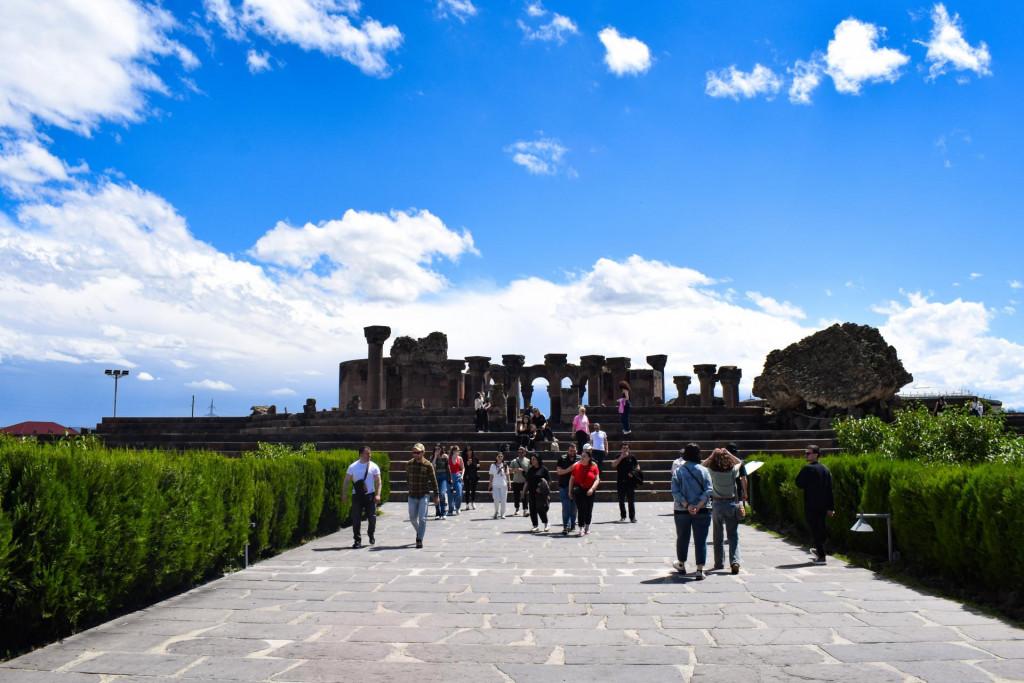
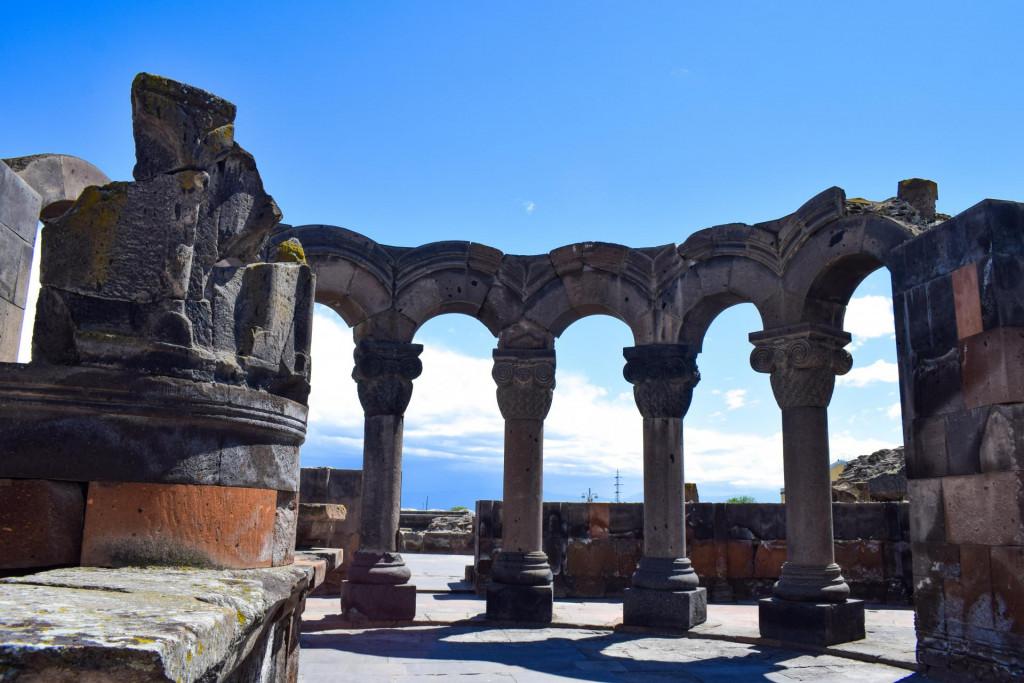
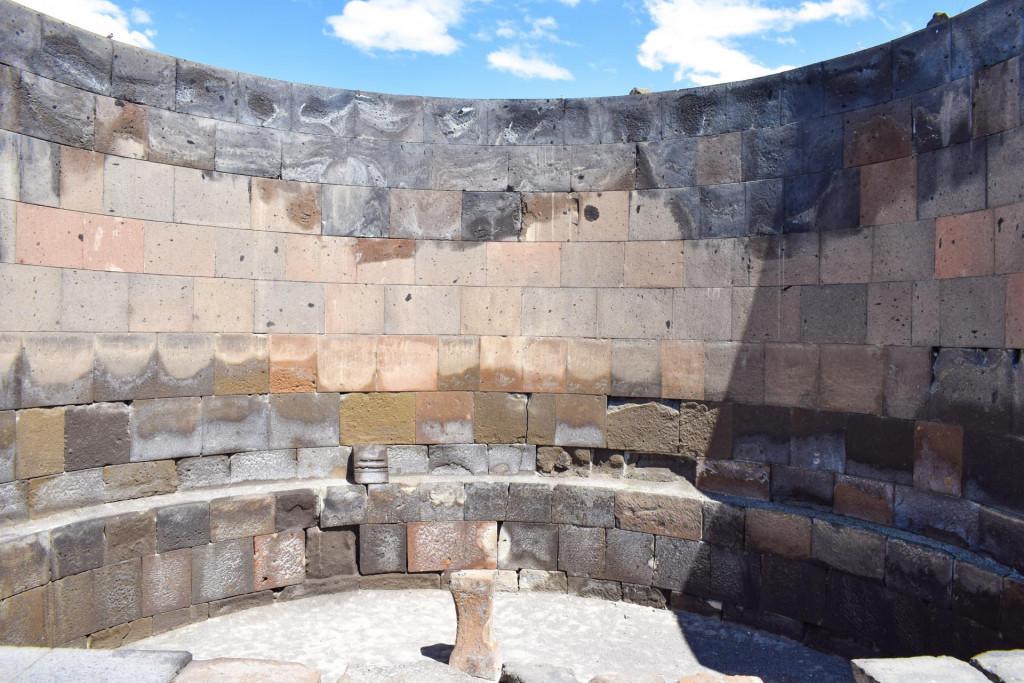
Zvartnots Cathedral (literally: "place of resurrection/vitality/joy") is a medieval Armenian cathedral located near Vagharshapat (Echmiadzin), Armenia. Built in the 7th century, the cathedral, now in ruins, was distinguished by its circular external structure (unique to medieval Armenian architecture) and a system of internal towers that supported a multi-story structure crowned by a dome.
History
Zvartnots was built during the first Muslim attacks by the Arabs, whose goal was to capture and conquer the territories of Byzantine and Sassanid Armenia. The construction of the cathedral began in 643, under the leadership of Catholicos Nerses III the Builder (Shinoghi). The church, dedicated to Saint Gregory, was built on the site where, according to legend, the meeting of King Thradat III and Gregory the Illuminator took place. According to the medieval Armenian historian Movses Kalankatuats, the church was consecrated in 652. From 653 to 659, Nerses was in Tao, and the construction of the church continued under the leadership of Anastas Akorats. After the capture of the Dvina by the Arabs and the increasing and intense wars between the Byzantine and Arab armies on the eastern borders of Byzantium, Nerses moved the patriarchal residence of the Catholicos from the Dvina to Zvartnots.
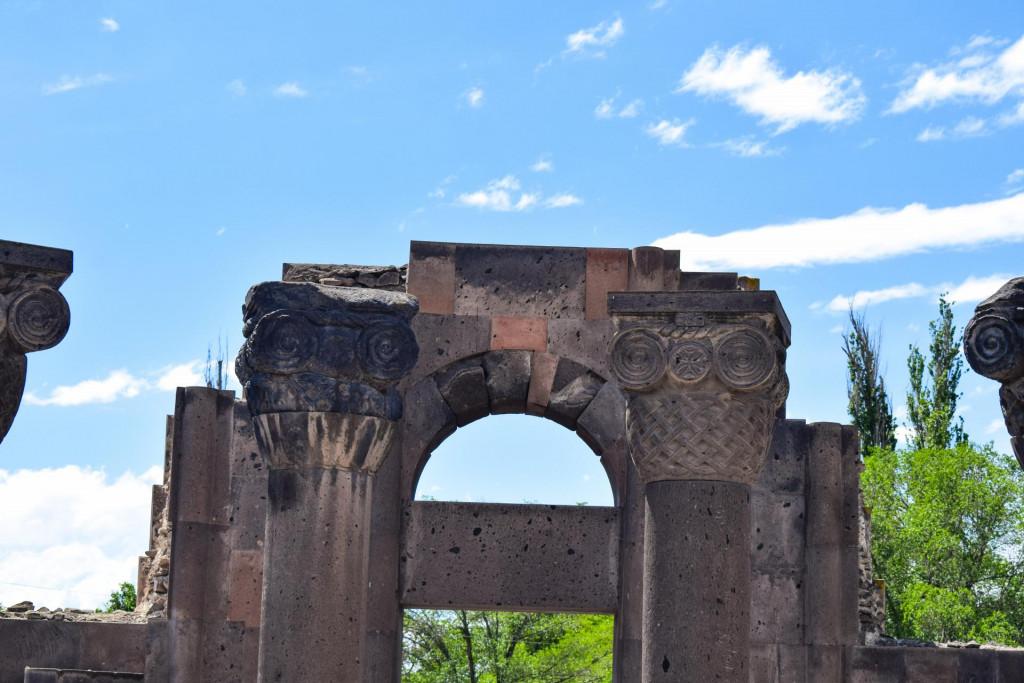
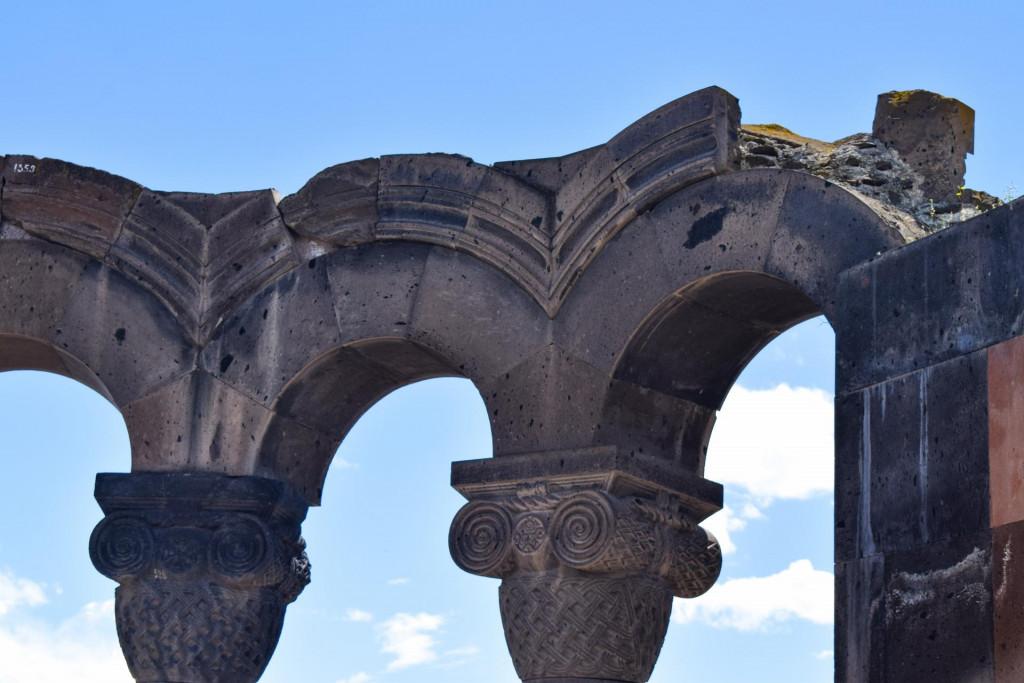
The church's exterior design, which includes basket-shaped capitals decorated with Ionic volutes, capitals depicting eagles, and ornamental friezes of vine branches, reveals the influence of Syrian and northern Mesopotamian architecture.
Zvartnots stood for 320 years before collapsing in the 10th century; by the time the 11th-century historian Stefanos Taronets (Asogiki) mentioned the church in his World History, the cathedral had already fallen into ruins. The exact cause of its collapse is still a matter of debate, although most people favor two main theories: a major earthquake or destruction caused by repeated Arab attacks.
The most common version is that it was destroyed by an earthquake, although the building was well-engineered and was built around 1000 AD (the estimated date of Christ's second coming). Excavations have revealed traces of a large fire, which may indicate an early attempt to destroy the church, although obsidian and lime were also used to bind the mortar during the construction (to bring it to brick-like hardness), and fire and explosives were used to clear the ruins during the archaeological campaign of 1893. In the last decade of the 10th century, during the reign of Gagik I Bagratuni, the architect Trdat built an exact copy of this temple in the city of Ani. Stefanos Taronetsi was referring to Zvartnots when he described the church inaugurated by Gagik I as "a magnificent building in Vagharshapat, built in the name of the same saint, which had previously been reduced to ruins."
Archaeological excavations
The surviving ruins of Zvartnots were discovered in the early 20th century. The site was excavated between 1901 and 1907 under the leadership of Khachik Vardapet Dadiani, which revealed the foundations of the cathedral, the remains of the Catholicos' palace, and a wine cellar. The excavations also showed that Zvartnots was built on the remains of buildings dating back to the reign of the Urartian king Rusa II.
The cathedral was designed with a central-domed, circumvallated tetraconch plan. The mosaic-decorated interior of the church was built in the shape of a Greek cross (tetraconch), surrounded by a corridor (nave), while from the outside the building was a 32-sided polygon, which appeared circular from a distance.
Many researchers favor the reconstruction model proposed in 1905 by architect Toros Toramanian, who worked on the original excavations and believed that the building was three-story.
40.160312
, 44.33656
Duration:
1 hour
Our guides are ready to help you on this trip

+59
Book a tour online!
Buy our tours online and explore incredible Georgia!
See all
Map


 LOGIN WITH GOOGLE
Please login to ask a question
Ask a Question